
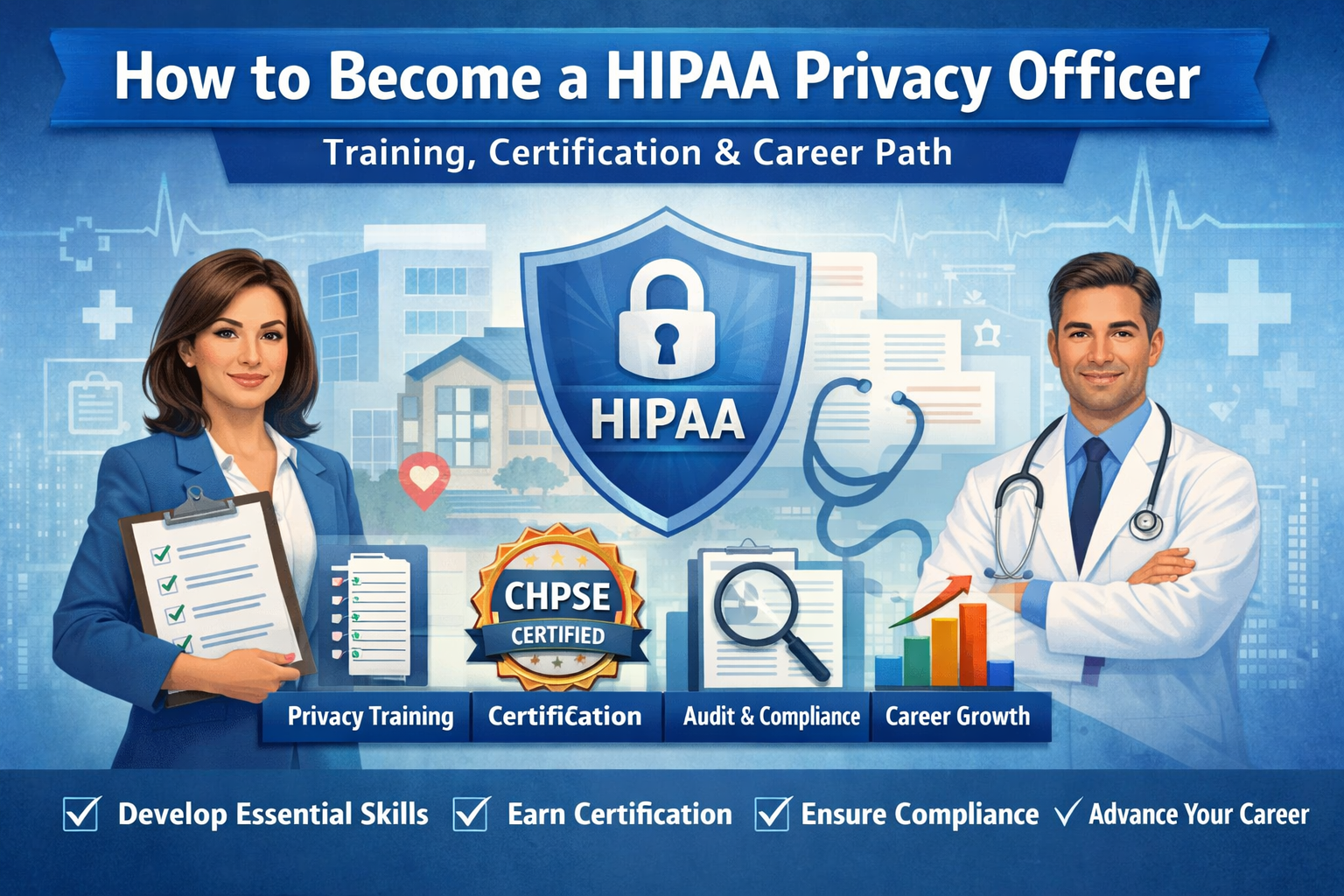
How to Become a HIPAA Privacy Officer: Training, Certification & Career Path
Healthcare organizations are under increasing pressure to protect patient privacy. That’s why the role of a HIPAA Privacy Officer has become essential across hospitals, clinics, dental practices, and healthcare vendors.
If you’re exploring this role-or have been assigned it-here’s what you need to know.
What Does a HIPAA Privacy Officer Do?
A HIPAA Privacy Officer oversees compliance with the HIPAA Privacy Rule and ensures Protected Health Information (PHI) is used and disclosed properly.
Key responsibilities include:
 Creating and enforcing privacy policies
- Training staff on HIPAA privacy rules
- Managing patient privacy requests and complaints
- Monitoring compliance and documentation
- Supporting audits and investigations
This role focuses on policy, education, and oversight, not IT security.
Is HIPAA Privacy Officer Training Required?
HIPAA does not mandate a specific course, but it does require organizations to ensure their Privacy Officer is properly trained based on their job role.
Professional HIPAA Privacy Officer Training typically covers:
- Privacy and Security Rule requirements
- Patient rights and disclosures
- Workforce training obligations
- Documentation and audit readiness
Without formal training, organizations risk misinterpretation and enforcement actions.
What Is HIPAA Privacy Officer Certification?
HIPAA Privacy Officer Certification validates that an individual understands privacy compliance responsibilities at an advanced level.Professionals seeking advanced validation may consider credentials such as the Certified HIPAA Privacy & Security Expert (CHPSE), which demonstrates comprehensive knowledge of HIPAA compliance leadership.
While not legally required, certification:
- Demonstrates professional competency
- Improves audit readiness
- Builds employer and regulator confidence
- Supports career advancement
Many organizations consider certification a best practice for compliance leadership roles.
Who Should Become a HIPAA Privacy Officer?
Common backgrounds include:
- Healthcare administration
- Compliance or risk management
- Human resources
- Health information management
- Legal or regulatory roles
Some organizations assign this role to an existing employee, while others hire dedicated compliance professionals.
Privacy Officer vs Security Officer (Quick Difference)
- Privacy Officer: Focuses on PHI use, disclosures, and patient rights
- Security Officer: Focuses on protecting electronic PHI (ePHI) through safeguards
Smaller organizations may combine roles, but both responsibilities must be addressed.
Career Outlook
With increasing HIPAA enforcement and privacy awareness, demand for trained Privacy Officers continues to grow—especially in healthcare organizations and business associates.
Final Conclusion
Becoming a HIPAA Privacy Officer requires more than a title. Proper HIPAA Privacy Officer Training and optional HIPAA Privacy Officer Certification help ensure compliance, reduce risk, and strengthen professional credibility.
For organizations, investing in trained privacy leadership is one of the most effective ways to protect patient trust and avoid violations.


